You never set out to sabotage your relationship. You never thought watching porn would affect your daily life.
It seemed private. Contained. Separate.
But now something feels different. The spark is gone. Your partner feels distant. You feel numb or irritable. And though you may not have connected the dots at first, it’s becoming clear: porn is robbing you of the everyday love you crave most.
This kind of erosion doesn’t happen overnight. It’s gradual, almost unnoticeable at first. But over time, it carves deep grooves into your emotional, relational, and even spiritual landscape. If you’ve felt this happening and wondered why love feels harder to hold onto lately, it’s not your imagination. Porn is designed to steal real intimacy, and it often succeeds quietly.
It might succeed in stealing your real connection for a season, but pornography addiction help can guide you back.
How Porn Warps Your Expectations
When you consume porn regularly, you’re rewiring your brain’s understanding of love, arousal, and connection. You begin to expect instant stimulation. Effortless satisfaction. Endless novelty. Real relationships, filled with nuance, emotion, and imperfection, start to feel…inconvenient.
The problem is that everyday love doesn’t operate like porn. It requires presence, patience, and vulnerability. When you’re conditioned by porn, you become less tolerant of emotional complexity and more reliant on fantasy. You start resenting the real for not matching the scripted. That resentment shows up in subtle ways like withdrawal, criticism, and lack of affection, and it slowly eats away at your ability to give and receive love.
You may still care deeply for your partner. But porn has changed the lens through which you see them. And once that distortion sets in, even the most beautiful moments can begin to feel flat.
Emotional Distance Isn’t Just Coincidental
One of the most overlooked impacts of porn is emotional detachment. Over time, your inner world begins to split. There’s the version of you who shows up at work, with friends, in public, and the version of you carrying a secret. This duality breeds internal tension. You feel less integrated, less whole. And that disconnection spills into your relationships.
When you numb out with porn, you’re avoiding stress or boredom, but you’re also avoiding connection. You’re avoiding the messiness of real emotion (your own and your partner’s). You become more comfortable escaping than engaging. And that avoidance pattern becomes a relational fracture point.
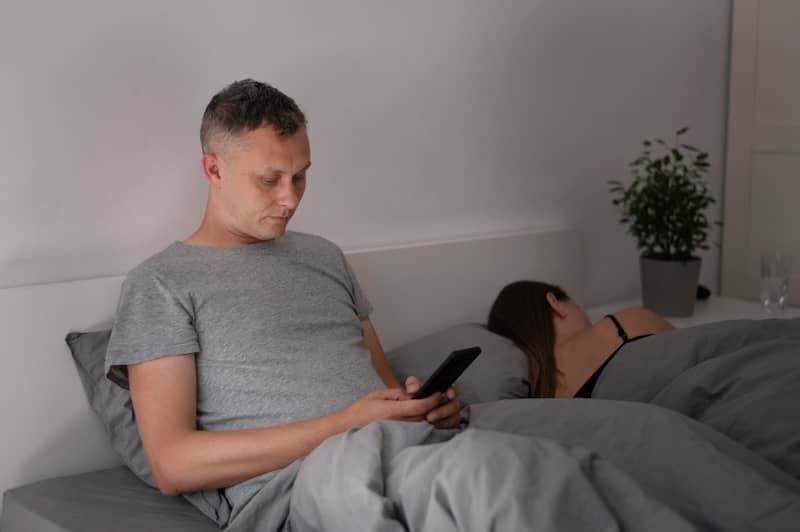
Your partner may not know exactly what’s going on, but they feel it. The eye contact you used to share, the spontaneous kisses, and the deep talks at night are all thinning out. And without consistent emotional engagement, love becomes more like cohabitation than connection.
Affection Without Intimacy
Porn use often leaves you able to perform but unable to connect. You might still show physical affection, but it starts to feel mechanical or one-sided. The emotional glue that makes intimacy feel rich begins to fade.
You might notice yourself avoiding sex or craving it only on your terms. You might feel disconnected even during physical closeness. That’s because your brain is pairing pleasure with screens, not souls. Real intimacy requires mutuality, emotional presence, trust, and empathy. But porn teaches you to take, not to share.
Over time, sex becomes less about bonding and more about relief. And when that shift happens, your partner feels it. They may not know the root cause, but they feel the disconnection. They start wondering if they’re the problem. You start wondering if you’re broken. The truth is neither of you is the enemy. Porn is.
The Invisible Weight of Shame
Even if you’ve kept your porn use hidden, the shame doesn’t stay contained. It seeps into your tone, your posture, and your confidence. You become more defensive, more easily irritated, and less playful. You start interpreting neutral comments as criticism, assuming your partner sees the worst in you, because deep down, you do.
This shame makes it hard to fully receive love. Compliments feel hollow. Acts of care feel undeserved. You start pushing away the very affection you long for. And the sad irony is that the more you retreat into porn to escape the shame, the more you deepen it.
Shame is the silence that starves love. It convinces you to hide when what you need most is connection. But here’s the good news: you don’t have to keep carrying it. You can break that silence. You can rewrite the story.
Real Love Requires Presence
Porn steals your presence. It occupies your mind with fantasy and your heart with shame. And without presence, love can’t grow.
To reclaim love, you need to start showing up again—not just physically but emotionally, spiritually, and intentionally. This might look like having honest conversations, practicing active listening, initiating affection with no agenda, and choosing transparency over secrecy.
Presence doesn’t mean you have to be perfect. It means you’re committed to being real. And when your partner sees that, trust starts to rebuild. Slowly. Steadily. Stronger than before.
Healing Is Possible, But Not Accidental
You won’t stumble into freedom. You won’t drift your way back into intimacy. Recovery requires structure, accountability, and commitment. It requires choosing a connection even when you feel unworthy of it.
If you’ve tried to quit on your own and keep relapsing, that doesn’t make you weak. It makes you human. But it also makes the structure non-negotiable. A guided recovery path helps you untangle the root issues (like trauma, identity, or stress coping) that drive your behavior. And it gives your relationship a real chance to heal.
You can learn to replace secrecy with honesty, distance with closeness, and performance with presence. You can become the kind of partner who not only wants love but knows how to nurture it.
What You Can Start Doing Today
Even if you’re still struggling, there are practical steps you can take now to start restoring the love porn has chipped away.
- Start journaling your emotions before and after porn use. This helps you connect the dots between your inner state and your coping behaviors.
- Invite your partner into a conversation, not a confession. Focus on how you want to grow, not just what you’ve done wrong.
- Create space for affection that isn’t sexual. Relearn the language of touch, humor, and shared time.
Finding support for spouses of sex addicts can also help your partner feel validated and not alone in their journey.
You don’t need to have it all figured out today. But taking a step toward transparency and accountability can shift everything. Love is not lost. It’s just waiting for you to return to it.