
Willpower alone can’t help with your alcohol addiction. That’s because alcohol addictions are about so much more than alcohol. Beneath the biological drive to drink lies emotional turmoil and false beliefs.
Your addiction lies to you. It alters your perception of self-worth and your abilities. With time, you may come to believe lies about yourself, your worth, and your ability to change.
The good news? You don’t have to stay there. When you uncover these beliefs and replace them with truth, you weaken addiction’s grip and strengthen your connection with God and those around you.
“I’m Not Enough”
This lie often forms through painful experiences of rejection or repeated failure. It makes you doubt your worth and erodes your confidence. It’s especially damaging because, as humans, we have an intense need to fit in. When you feel as though you can’t meet the standard, it is crushing.
That feeling is what leads people to reach for alcohol. Alcohol can numb the feeling that you’ll never measure up and distract you from mounting pressure.
The reality is that you don’t have to earn your worth. You are enough, not because of what you do, but because you were created with inherent value.
“I Can’t Cope Without Drinking”
Life is hard. Day after day, we experience stress, grief, anger, and even boredom. It can be overwhelming to manage the emotions we experience. At some point, however, your addiction convinced you that you need alcohol to self-soothe.
But the lie that you can’t live without drinking will hurt you far worse than any anxiety ever will. In reality, you are capable of building positive coping skills. With effort, you can learn to sit with discomfort rather than run from it. You are capable of managing hard days and big emotions without alcohol.
“This Is Just Who I Am”
Humans like to self-identify and categorize themselves. In high school, there are the “popular kids,” “class clowns,” and “band kids.”
When you deal with an addiction for a long time, it’s easy to accept your identity as an addict. When you think about recovery, it feels impossible to break free from that title.
Even though your addiction tells you that you’re a screw-up and lost, it isn’t true. Your addiction does not define you. Freedom comes when you stop agreeing with the lies about who you are.
“I’ve Already Gone Too Far”
Regret is one of addiction’s fiercest weapons. After you relapse, you think: “What’s the point in trying again? I’ve already ruined everything.” That belief prevents you from leaving your addiction behind.
No mistake is too far. Every day is a new day. Take a breath, choose to make a change, and start again.
“No One Understands Me”
Your addiction may tell you that your story is too dark and your failures too intense. You feel afraid to share for fear of judgment. Shame builds as you hide your addiction. You falsely assume that no one else could relate to your situation.
Addiction thrives in isolation. When it tells you that you’re better off alone, don’t listen. As you open up about your addiction, you find out you aren’t alone.
There are alcoholism support groups full of people who have walked the same dark roads you have. Surround yourself with people who understand your situation. Form an accountability partnership, and don’t be afraid to ask for help.
How the Truth Helps With Alcohol Addiction
You can fight addiction with willpower for a while. But if the lies underneath aren’t exposed, the drinking will return.
Real change begins when you learn to change your thought patterns. Learn to change:
- “I’m weak” to “I’m getting stronger every day”
- “I always mess up” to “I’m in the process of learning”
- “This is who I am” to “This is who I was, but not who I’m becoming”
All it takes is a shift in perspective. Think about how God sees you: His creation, meant for greatness.
How to Switch the Narrative
Retraining your brain doesn’t happen overnight. The lies of addiction are persuasive and can feel very real at times. But it’s not too late to start changing your false beliefs. Here’s how you can begin today:
- Name the lie. Write down the lie or say it out loud. When you voice the lie, it’s easier to understand that your brain is wrong.
- Challenge it. Ask, “Where did I learn this? Is it really true?” If you’re really struggling, ask an alcohol addiction counselor or family member to help you challenge the lie. An outside perspective can be more powerful than your own sometimes.
- Replace it. Out with the old, in with the new. Every time you hear a lie, repeat a previously chosen mantra to replace it. You can have the affirmations listed or memorized, but whenever you feel weak or weighed down, remind yourself that you are not what your addiction says you are.
Truth breaks addiction’s narrative and writes a better one.
Change Is Possible
Addiction wants you to believe that you’re stuck forever. But freedom from addiction is possible.
You are not powerless against your addiction. It’s time to take back control of your life and replace the harmful lies your addiction tells you.
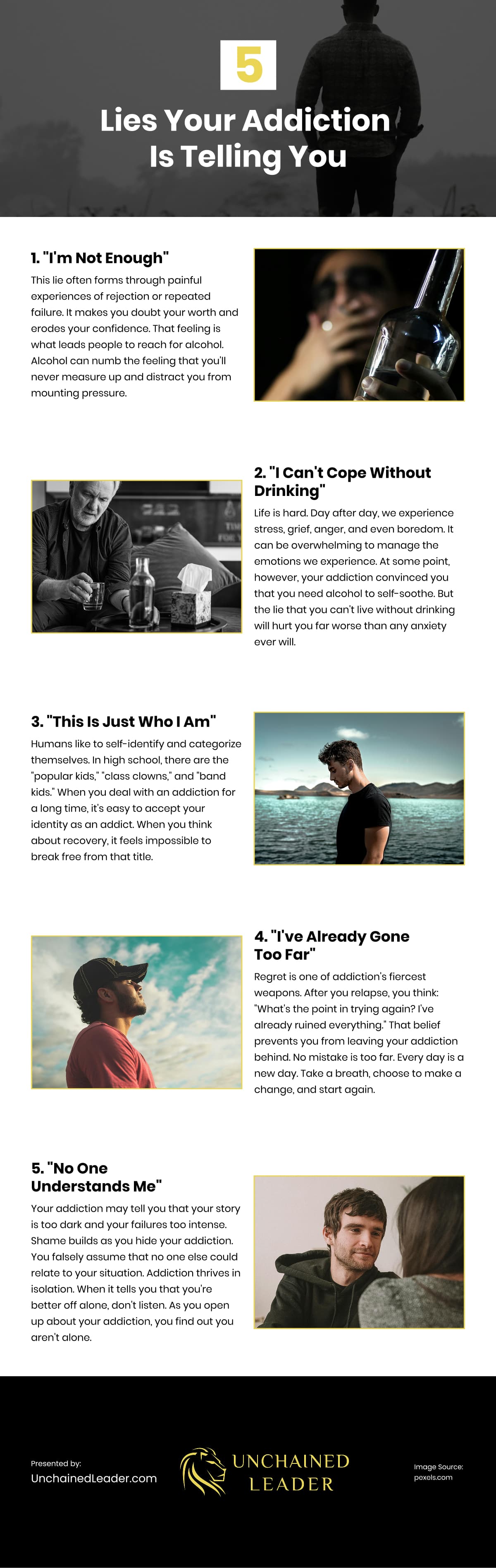
Infographic
Alcohol addiction isn’t simply a lack of willpower — it distorts self‑perception, undermines self‑worth, and erodes belief in change. This infographic reveals the lies addiction tells, helping you recognize them and reclaim strength in recovery.