You don’t always see a relapse coming. One moment you’re feeling strong and focused, and the next you’re slipping back into porn, wondering how it happened again. But here’s the thing: relapse rarely starts in the moment of temptation. It starts days before, in the small, seemingly harmless decisions you make without realizing they’re stacking up against you.
These are more than just bad habits. They’re blind spots. And if you don’t recognize them, you’ll keep getting blindsided by relapse you swore you’d avoid. But once you uncover them, you can start making choices that actually strengthen your freedom, not sabotage it.
It’s Not the Urge. It’s What Happens Before the Urge.
When you think about relapsing into porn, you probably focus on the urge itself, that surge of temptation, the craving that feels overpowering. But relapse is almost never about that isolated moment. It’s about everything that came before it. The patterns. The routines. The environments.
What you do with your time, who you surround yourself with, and how you manage stress, these things quietly condition your mind. Relapse doesn’t just happen. You drift into it through a thousand unchecked habits.
The Subtle Patterns That Sabotage Your Progress
Some of the habits that lead to porn relapse don’t look like sin. They don’t raise red flags. But they weaken your internal defenses and lower your ability to make clear decisions. Here are a few of the most common hidden triggers:
- Late-night screen use: Scrolling through social media or YouTube at night might seem innocent, but it exposes you to stimulating content and exhausts your willpower.
- Skipping rest and routines: When you stop prioritizing sleep, exercise, and spiritual rhythms, your emotional regulation starts to erode.
- Emotional bottling: Avoiding your feelings doesn’t make them go away. It just sends them underground until porn becomes your emotional pressure valve.
Each one may feel minor on its own. But together, they’re the slow leak in your tank. And when you’re already running low, the next hit of stress, loneliness, or anxiety can send you right back into old patterns.
Emotional Triggers Hide in Disguise
You’ve probably heard that boredom and loneliness are major triggers for relapse, but they don’t always feel that way in real time. Sometimes they show up as scrolling endlessly, procrastinating on work, or feeling extra irritable in conversations. These are often signs your emotional tank is draining.
The problem is, you’re trained to manage these feelings quietly. You try to power through or numb them. Porn becomes the shortcut to relief, not because it solves anything, but because it provides a fast, private way to distract yourself. You don’t even realize what you’re escaping from until after the relapse hits.
That’s why emotional awareness is so key. Whether you pick up the terminology in pornography addiction counseling or some online research, you need to learn how to name what you’re feeling before it turns into a porn craving. That’s how you break the autopilot cycle.
When Isolation Feels Easier Than Vulnerability
One of the most dangerous habits that leads to relapse is choosing isolation over vulnerability. When you’re ashamed, stressed, or exhausted, the last thing you want to do is reach out to someone. It feels easier to just stay quiet. But that silence is the breeding ground for relapse.
Porn thrives in secrecy. So the more you disconnect from community, the more it becomes your default connection. You weren’t meant to carry this struggle alone. But if you wait to reach out until you’re in crisis, it’s already too late. The support needs to come before the breakdown, not after.
You Don’t Have to Be “Falling Apart” to Be at Risk
Many guys assume that relapse only happens when they’re overwhelmed or emotionally wrecked. But it also happens in moments of success, when you feel on top of things, confident, even spiritually strong. Why? Because you stop staying alert.
You let your guard down. You skip check-ins. You loosen boundaries. The habits that protected you during the hard times start to fade. And without realizing it, you drift right back into the behaviors that led to relapse in the first place.
Freedom isn’t just about not watching porn. It’s about staying grounded in rhythms that keep your heart, mind, and body aligned with purpose. And those rhythms need to stay in place, whether you’re struggling or thriving.
Recognizing the Warning Signs Early
To break the cycle, you need to develop a kind of early warning system, a way to catch yourself before you hit the tipping point. Start by identifying your relapse rituals. What do your evenings look like when you’re drifting toward porn use? What’s different about your mindset or schedule that week?
Then, build interrupt points. These are small shifts you make as soon as you spot danger ahead. Maybe it’s texting a mentor. Going for a walk. Close your laptop and get out of your room. These shifts don’t need to be huge; they should just be intentional.
Here are a few examples:
- Replace nightly scrolling with a wind-down routine that includes prayer or journaling
- Schedule a midweek check-in with a trusted friend or group
- Create “off-limits zones” for your devices (like your bed or bathroom)
These may seem small, but they add up. And over time, they change the momentum of your week.
Build a Life That Makes Relapse Less Appealing
If you want to quit porn addiction, you can’t just remove porn. You have to replace it with something better. That means building a life where connection is real, emotions are named, and stress is managed proactively. It means developing relationships that support you and routines that protect you.
This isn’t about being perfect. It’s about staying honest. Staying connected. And staying aware of the hidden habits that used to trip you up, so they don’t have to again.
Take Ownership of the Small Things
You might not be able to control every urge or emotion. But you can take responsibility for your environment, your rhythms, and your hidden habits. These small shifts in awareness are what build lasting change.
Don’t wait for the next relapse to reflect on what went wrong. Start identifying the quiet decisions that are shaping your story every day. The more intentional you are with the small things, the more resilient you become in the face of temptation.
You’re not powerless. You’re not alone. And you don’t have to be caught off guard anymore. Freedom is built on awareness, and that starts now.
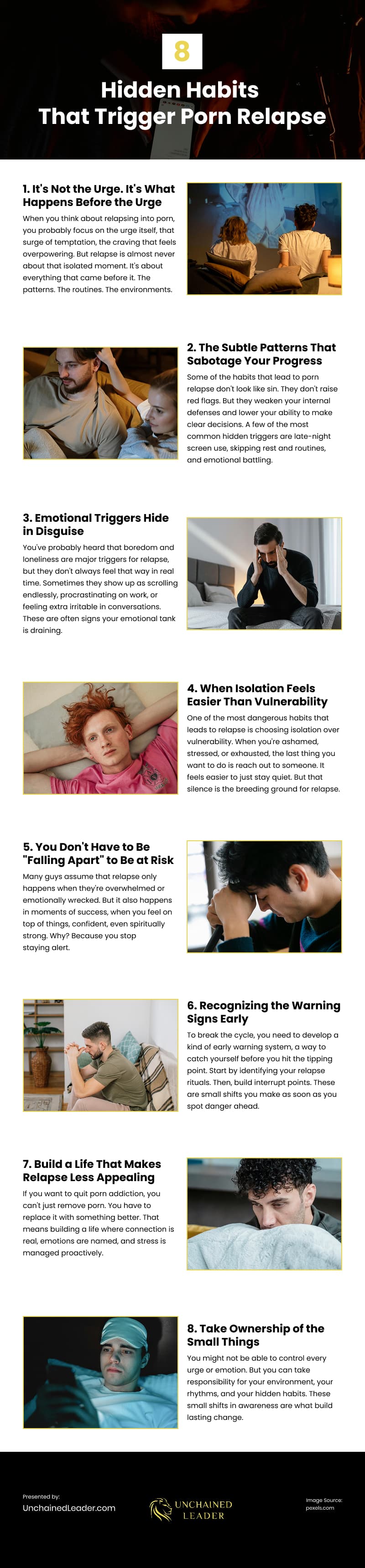
Infographic
Relapse may feel sudden, but it often stems from deeper, overlooked causes. Subtle patterns and hidden triggers can quietly erode your resolve long before any urge appears. This infographic reveals the underlying habits that can lead to a relapse into watching porn.