
Addiction is often fueled by deep-rooted emotional struggles, stress, and unmet needs. Whether it is a sexual addiction, substance abuse, or compulsive behavior, you may have found yourself turning to your addictions as a way to escape pain, suppress emotions, or seek fleeting comfort.
However, these behaviors only lead to more shame, deeper struggles, and an ongoing cycle of self-destruction. Breaking free from addiction requires more than just stopping the harmful behavior—it requires replacing those desires with healthy coping mechanisms that nurture your mind, body, and soul.
As you attempt to quit addictive behaviors, you may struggle to find effective alternatives to manage stress, triggers, and emotional pain. Without positive coping strategies, you may fall back into old habits. The key to your long-term freedom is identifying and implementing healthier ways to process emotions, build resilience, and fill the void addiction once occupied.
Follow along as we explore faith-based, practical, and sustainable coping mechanisms to replace addictions, ensuring that your journey to recovery is not just about quitting, but about transformation and renewal.
What Creates an Addiction?
Before you can successfully replace addictive behaviors, it is crucial to understand why addictions develop in the first place. Addictions often stem from:
- Emotional Pain and Trauma: Many individuals use addictive behaviors to numb past wounds, childhood trauma, or personal losses.
- Unmet Emotional Needs: Loneliness, low self-worth, and a need for validation can lead people to seek comfort in harmful habits.
- Stress: High levels of stress without healthy outlets can drive individuals toward addiction as a way to self-soothe.
- Lack of Purpose or Spiritual Connection: A sense of emptiness or disconnection from God can make addiction an easy distraction.
When you understand what fuels your addiction, you can intentionally choose healthier, more fulfilling ways to meet those needs.
Physical Outlets for Emotional Release
Because many addictions are physically ingrained habits, you can redirect urges by incorporating healthy physical activities. Exercising releases endorphins, the body’s natural stress relievers, which reduce anxiety, depression, and cravings.
Some effective physical outlets include:
- Strength Training and Cardio Workouts: Engage in weightlifting, running, or swimming to redirect built-up stress and boost confidence.
- Outdoor Activities: Spend time in nature. Go on a hike, or simply take a walk to provide clarity and emotional renewal.
- Breathwork and Relaxation Techniques: The practice of deep breathing, progressive muscle relaxation, and stretching can help manage triggers.
Your physical health plays a crucial role as you seek to find balance in your life. Through movement, you can find positive ways to replace the destructive patterns of addiction.
Emotional and Psychological Strategies
Replace Negative Thoughts with Truth
One of the biggest battles in addiction recovery takes place in the mind. Addictions thrive on distorted thoughts, lies, and self-defeating beliefs. As you struggle with addiction, these false beliefs may hinder your progress:
- You will never break free from this.
- You are too weak to change.
- God is disappointed in you.
These negative thoughts reinforce addiction and keep you stuck in shame. However, these lies can be replaced with God’s truth. Your mindset can pivot and this allows you to see yourself as He sees you—forgiven, loved, and capable of transformation.
Whenever negative thoughts arise, counter them with Scripture. For example, when shame tells you, “I am not worthy,” remind yourself of Romans 8:1:
There is therefore now no condemnation for those who are in Christ Jesus.
Positive, daily renewal of your mind allows you to break the mental chains of addiction and walk in freedom.
Journal and Express Emotions in Healthy Ways
You may have fallen into addiction due to the inability to express your emotions in healthy ways. Journals can provide a safe space to process thoughts, emotions, and triggers without the need to fall back on harmful habits.
Writing down prayers, reflections, and gratitude lists shifts your focus from struggles to victories. It also helps you track progress and recognize patterns in emotional triggers and behavioral responses.
If you prefer to express your emotions out loud, counseling, faith-based mentoring, or support groups offer another healthy way to work through feelings.
Cultivate Meaningful Relationships
Build a Strong Support System
Addiction thrives in isolation, but healing happens within a community. Surround yourself with accountability partners, mentors, and a faith-filled support system. This creates a foundation for lasting change.
Engagement in church activities, small groups, and faith-based recovery programs allows you to build relationships with people who uplift and encourage your journey.
The right support system provides prayer, accountability, and wisdom, making recovery a shared victory rather than a lonely struggle.
Creative Strategies
Flex your creative muscles when you are fighting off the urge to indulge in your bad habit. Engaging in creative activities, like painting, writing, music, or crafting, can provide an emotional release and help you express yourself in a non-destructive way. It can also be a great distraction and a way to channel your energy.
Whether you already have a creative outlet or you decide to develop a new talent, you can take your pain and create something beautiful.
Healthy Habits
Keep a Routine
Having structure in your day can help provide a sense of purpose and direction. Establishing regular sleep, meal, and exercise routines can contribute to mental clarity and emotional well-being.
Self-Care
Taking care of your physical, emotional, and mental well-being is essential. This includes maintaining proper nutrition, getting enough sleep, engaging in relaxing activities (like a warm bath or nature walks), and doing things that make you feel good without harmful substances or behaviors.
Replace Addiction with Life-Giving Habits
Healing from addiction involves more than just stopping a destructive habit—it requires replacing it with something better. When you turn to God, engage in healthy physical activities, renew your mind, journal, and surround yourself with positive influences, you build a sustainable and fulfilling life free from addiction.
Recovery is a journey, and setbacks may occur, but God’s grace remains constant. Every time you choose faith over fear, self-care over self-destruction, and truth over lies, you take another step toward the freedom God has promised.
You can break free, and it starts with one healthy choice at a time.
Infographic
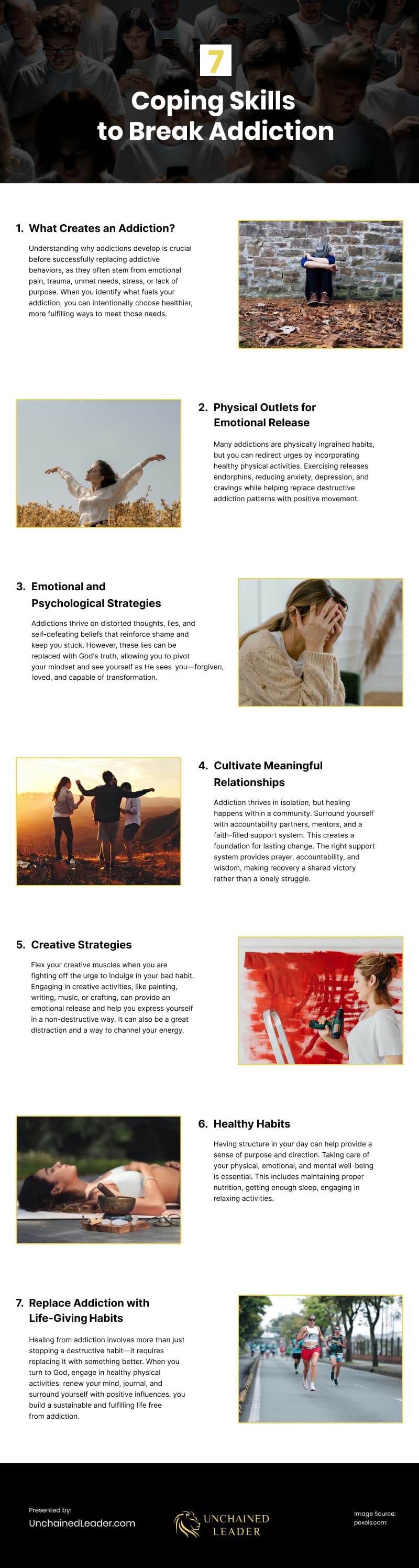
Overcoming addiction is not just about quitting; it’s about replacing harmful habits with positive ones that foster healing and growth. This infographic highlights faith-based and practical coping strategies to help transform your recovery journey into one of renewal.